In 1900-02 Todor Alexandrov started to develop an even larger activity for which we have more detailed evidennce from
Pavel Shatev, who became his close aide. At that time Alexandrov learned about the Solun bombers from Shatev and decided to take a stance.
In Kratovo Alexandrov found a small group of people extremely devoted to the national cause led by the head teacher Vladimir Karamfilov from Prilep.
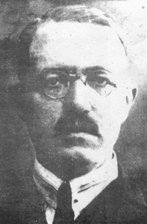
During the 1900-01 school year Pavel Shatev was interned in his hometown of Kratovo after his release from the Istanbul prison. Having walked the whole distance from Solun through Dojran, Strumica, Shtip and Skopje he was placed under strict control in his home. As it is known he was the one who dug the underground passage under the foundations of "Bank Ottoman" in Istanbul together with Slavi Merdjanov, Petar Sokolov and Petar Mandjukov so that the bank be blown up but the capture of the dynamite frustrated their plan. All were arested and after the intervention of the Bulgarian government the three were extradited to Bulgaria and only Shatev as a Turkish subject was interned in his town without his guilt being established. He stayed at his parents' and became a teacher and coleague of Karamfilov and Alexandrov, substituting for the sentenced Kitanov and two other teachers. Only one year his coleagues' junior Shatev found a suitable revolutionay medium amongst them. He became especially good friends with Todor Alexandrov. Without revealing the secret about the passage under "Bank Ottoman" Shatev initiated him in the ideology of the "boatmen" since in Todor he saw a man with a clear mind and readiness for self-sacrifice. Then he uncovered the plans of the terrorist circle. "I wanted to convince Todor Alexandrov," Shatev wrote in his memoirs," to become our comrade and to quit teaching at the first call and join the circle." Alexandrov made it clear that in principle he accepted the methods of struggle - terrorist activities against Turkish offcials and bombings of large banking nad commercial institutions, mostly foreign ones, through which to attract the attention of the European community to Macedonia. Alexandrov immediately noticed that Shatev is no reaist and has no idea about the tasks of such type of struggle. He pointed out that for it to be successful it requires many committed people and lots of financial resources but as a matter of fact even Shatev himself was dependent on his parents. The realism of came from his own life because, having remained an orphan, with a mother who had to look after many little children, he had to take care of both his family and the national cause. Therefore he was not inclined to make rash experiments. Shatev notes: " He was looking for ways of action through which to create a huge organization, controlled by a single centre… Although our ways were different, Todor Alexandrov tried to be of help to me…" "After prolonged contact between us came up quite friendly and intimate realtions."
This was the beginning of Alexandrov's connection to the "boatmen".
Shatev joined Alexandrov's initiative to raise money from the wealthier citizens to help the liberation cause. The district committee, led by Vladimir Karamfilov and Shatev's brother Ivan Potsev Shatev assigned Todor to lead a group of ten young people for propaganda amongst the citizenry. Alexandrov and Shatev presented the wealthry donors with the receipts officially signed and sealed. Thanks to Alexandrov's efforts a significant sum was raised.
This cooperation of the two young men further fostered the connection between them and becomes the guarantee for the success of the Solun bombers' plan. The same year Alexandrov was relocated to be a teacher in Kochani. The reasons for this remain unknown but this circumstance proved very important because he was apponted to be the head teacher in the local school. Simultaneously he was chosen to be the organizational leade of the district with the relevant authority and opportunity for action. He remained there until his arrest on 3 March 1903.
In Bulgaria Shatev met part of his comrades from the circle, chiefly with Ortse, who arrived from Europe, where together with Sarafov he aranged the purchase and the delivery of 1000kg melanite. He also met Dime Mecheto and Petar Mandjukov. The explosives managed to reach reach Dedeagach from Marseilles but Ivan Garvanov confiscated it. This brought about a conflict between the "boatmen" and the Central Committee. They decided on the purchase of new explosives, now with organizational resources supplied by Gotse Delchev. The new batch of melanite, c. 250 kg, was carried through the border by Shatev and his aides via the channel Kyustendil - Sazhdenik - Sasa - Kochani and further.
The only way to carry the dangerous load was rice, which was exported in sacks from this famous centre of rice production in Macedonia. About this Organdjiev reminisces in his memoirs: "Every Tuesday, a marked day in Veles, the card drivers would bring one or two loads ofrice and in every sack there would be a few kilos of dynamite. This was quite risky because the government officials poked in the sacks to look for smuggled tobacco. The first time I myslef carried, in the cab I was riding in, some dynamite in a sack with poppy seed and only by bribe did I manage to escape the check. The cart drivers did the same thing. The loads used to arrive in a certain inn and I was informed about that by a special sign. From the inn I transferred them in my uncle Nikola Organdjiev's house where I used to store the explosives."
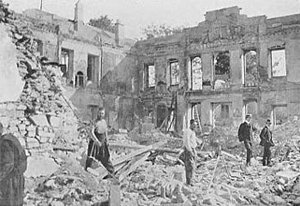
After that the dynamite was redirected to Solun by Organdjiev in vegetable oil tins where it was taken over by Ortse and Kosta Kirkov again with averting the government checks and controls. It was then immediately placed under the foundations of the "Ottoman Bank" through the existing passageway.
From the hitherto mentioned facts it is evident that the key to the whole action along the Sasa - Kochani - Veles channel was Todor Alexandrov. Acting highly conspiratively and with great care he revealed his excellent organizational skills which he later used in the reconstruction of the IMRO on two occasions - after the Hurriet and again after World War I.
Albeit an adherent of the IMRO tactics of mass insurgency Alexandrov highly valued the sacrifice of the Solun conspirators. Having got an unforgettable impression from their heroic deed he felt their spirit and showed this in 1911 with the series of bombings throughout Macedonia organized by him and later during the struggle against the Serbian oppressors.
It will not be redundant to note that at the time Alexandrov was teacher in Kochani for the second time and was district leader of the
Organization through his region most armed groups passed on their way to the various corners of Macedonia. From them he first learned about the decision for insurrection of the January congress of the IMARO. Together with his other aides from Kratovo led by Grigor Manasiev and Stoil Anov - just released from th Prishtina prison - he discussed the formation of the district armed forces. Shortly after, however, due to the betrayal by a few Kochani Kutsovlahs, from whom he wanted money for the insurrection, he was arrested and sentenced to 5 years in prison. From that he served 13 months and was released in April 1904 long after the Solun bombers performed their historic exploit. The inspiration of that exploit must have guided Alexandrov along all of his revolutionary way.
[
Home]
[
Previous]
[
Next]
